Thursday, 9 October 2014

April 2014 - I spy

The first roller arrived back on territory at Androlikou on 2nd April, just a few days after the last nest box was put up. It remains to be seen whether the birds find the new bijou accommodation to their liking. Hopefully the nest boxes will prove attractive so, failing that, I’ve spent much of the month trying to confirm the return of roller pairs to last year’s nest sites and identifying new ones.
 
The first roller of the spring back
at Androlikou
  
Considering what obvious and brightly-coloured birds rollers are, it can be extremely tricky to locate their nest cavities when they’re not using nest boxes. They are extremely wary when approaching the nest site and also often forage several hundred metres from it. I’ve racked up many days-worth of observation time trying to follow pairs of birds back to likely nest site locations, only to find that the nest entrance is located 20m up a cliff face and therefore out of the range of my trusty ladder. I have had some successes though, and the number of accessible nest localities is now approaching my minimum target of 20.
 
Yet another inaccessible nest site...

An accessible nest site! Spot the roller pair...
 
As well as searching for nests, I’ve been spending quite a lot of time trying to confirm whether or not any of the geolocator birds from last year have returned safely from Africa. It’s looking promising, as at least three colour-ringed birds have been re-sighted so far, but I won’t be able to definitely say whether they still have the geolocators attached until I have the birds in the hand.
 
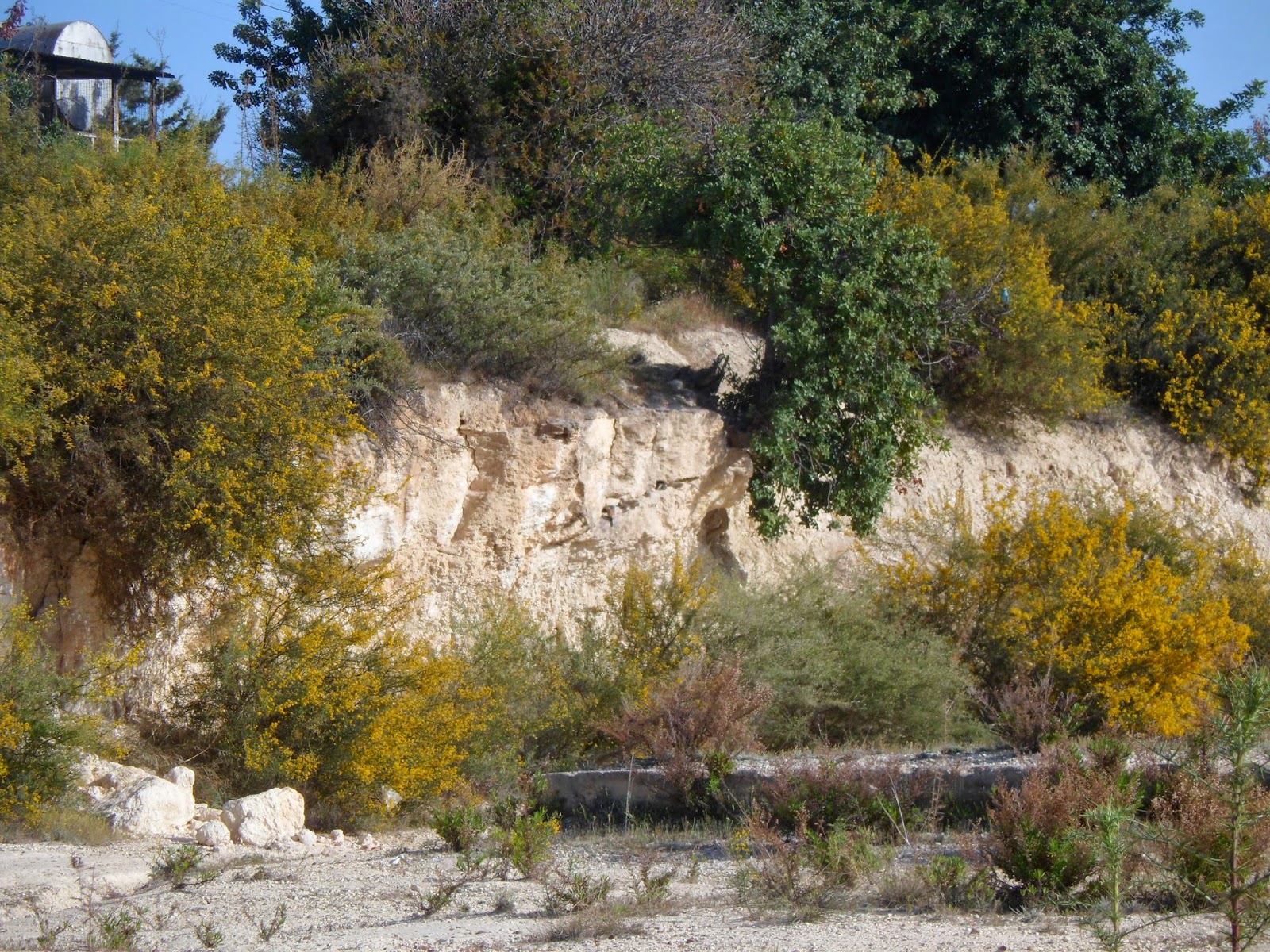
View across the east of the study area: most
 flat areas of land are farmed in some way.
 
Aside from my research, I’ve been lucky enough to go out ringing on a couple of occasions with a team from the University of Cyprus (based in Nicosia). They are carrying out work on the endemic Cypriot subspecies of scops owl, and the interactions between the endemic Cyprus warbler and other Sylvia warbler species.
 
Cypriot scops owl

Sardinian warbler

Hoopoe
 
Migration is at its peak in early to mid-April, and there are birds everywhere right now. However, the most impressive observation I’ve had recently was the massive sustained painted lady butterfly migration through the island for several days mid-month. Huge numbers were seen migrating in a north-westerly direction across the study area, and I was also lucky enough to find at least five plain tiger butterflies (an incredibly scarce African migrant species in Cyprus) mixed up in the tumult.
 
Painted ladies

Plain tiger (via wikicommons)
 
The bee-eaters are just starting to move through now though, which means that spring migration is approaching its endpoint and the rollers will soon be on eggs…
 
Collared flycatcher in the garden

Great spotted cuckoo

Red-footed falcon and lesser kestrel

Little egrets

Ortolan bunting

Bee-eaters having a dust bath


Wednesday, 8 October 2014

March 2014 - Nest box shenanigans

I arrived in Cyprus this year in early March; the idea being that I’ll have time to collect the newly shipped nest boxes from Limassol Port and install them before the first rollers arrive back on territory at the end of the month. Thus ensued a Whacky Races-style drive around Limassol docks as I tried to locate the warehouse holding the new arrivals (including a sudden veer off the road when I spotted a pied kingfisher (a Cyprus rarity) sat on wires alongside the port road!) It soon transpired that it isn’t actually possible to fit 18 large wooden boxes inside a small hire car in one go either, so I racked up the mileage over a few days as I ferried them back piecemeal to the Paphos study area.
 
Pied kingfisher - No. 1 cause of road
accidents in Cyprus
 
It’s probably about time that I also disclose that I have a new love in my life… My newly purchased inflatable roof-rack! No longer do I have to lash my Nemesis (AKA the ladder) onto the hire car roof with random pieces of rope and dog blankets, nor risk destroying the paintwork with it. It’s definitely increased my fieldwork efficiency twofold, and exponentially decreased the number of ladder-induced bruises across my body.
 
My trusty steed for the field season,
surmounted by the inflatable Better Half
 
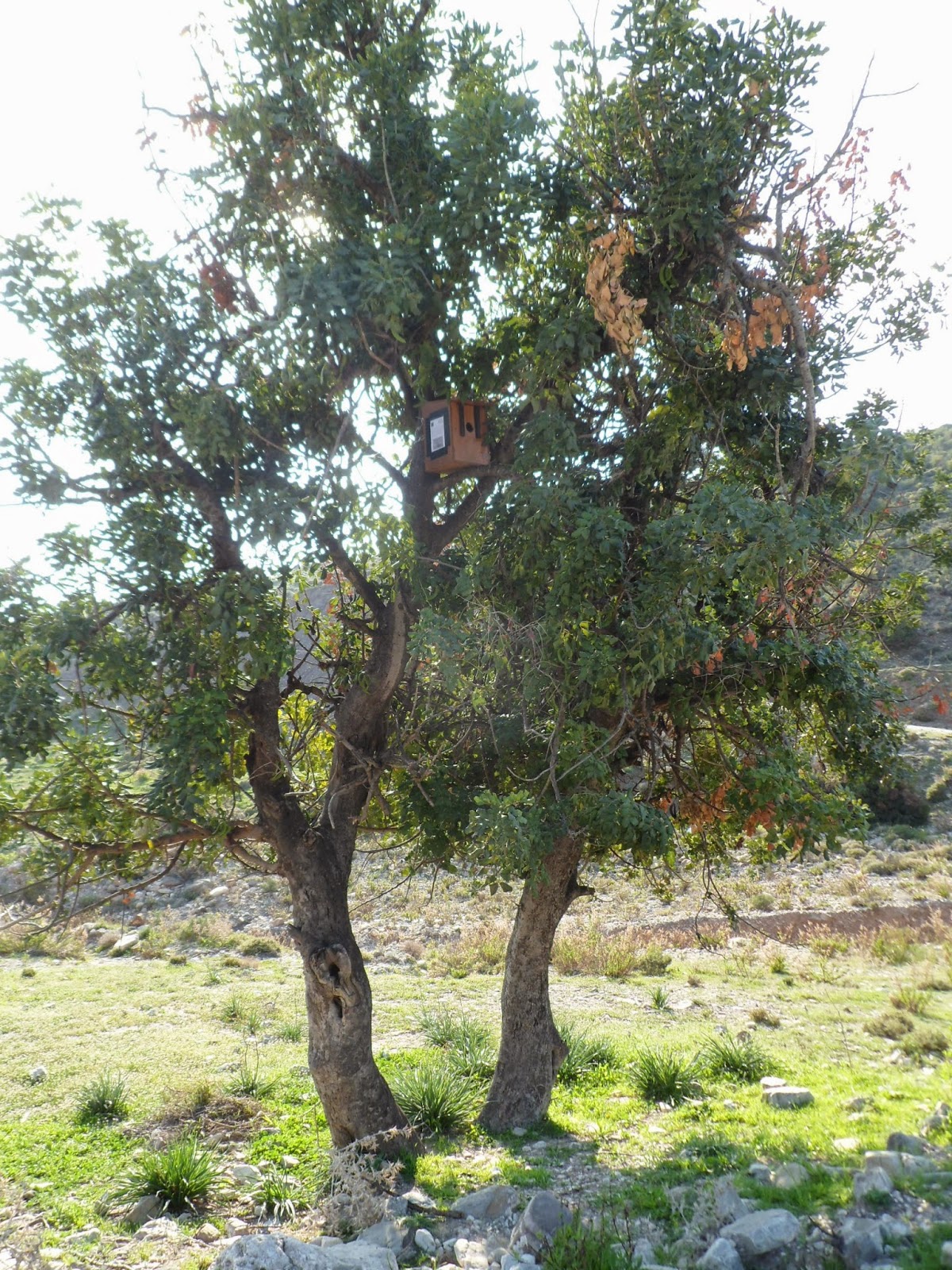
I’ve been installing the 22 new boxes, and redeploying the 18 from last year, for much of the month. I decided that the older nest boxes had originally been deployed at too high a density to make them useful in providing spatially independent data points (should the rollers choose to use them). This has meant removing them from their original positions and installing them, alongside the new ones, across the study area at approximately 1km intervals. Some of the older boxes are already in a slightly parlous state. Upon removing an unexpectedly heavy one from an almond tree at Androlikou, it became clear that the local rodent population had taken a particular liking to it and had filled it to the brim with almond shells!
 
Nuts
 
Another unexpected problem arose when the clutch on hire car decided to snap in half underfoot whilst I was carrying out a three point turn in the middle of a rural junction. I think that the hire car reps who finally delivered a replacement car were somewhat bemused by the presence of a large folding ladder and 10 large nest boxes on the side of the road…
 
Fail...

Even more fail...
 
Despite the various ups and downs, I have managed to get all 40 nest boxes up and in place before the rollers arrive back on territory. Fingers crossed that they like the look of them! Migration is already in full swing here; I’ve provided a few record shots of some nice bits and bobs that I’ve seen over the last few weeks.  
 
The finished article

Ruppell's warbler

Levant (aucheri) grey shrike: a handful of
previous Cypriot records

Female desert wheatear

Red-throated pipits
 

The in-between months

After returning to UEA in late July, most of the autumn and winter has been spent digitising field maps in ArcGIS and carrying out initial analyses of the productivity, cavity and habitat data collected during the 2013 field season. A couple of brief, but excellent, interludes have been provided by UEA’s first hosting of the biannual European Ornithologist’s Union Conference in August and the second year undergrad Ecology Field Course in the south-west of Ireland (upon which I demonstrated).
 
Given the difficulties experienced in finding ‘natural’ nest cavities in Cyprus during the spring, I’ve also decided to commission another 22 nest boxes to install across the study area in 2014 (thanks Dad!) These will be finished in February, then shipped out to Cyprus for collection in the spring. It also looks like I’ll be joined by an MSc student from UEA to assist with field work in 2014, which will be great.
 
However, one of the most exciting developments for the project is the development of novel GPS loggers for deployment upon the rollers next spring. If they work as well as hoped then we should be able to get really high resolution spatial data from the rollers, both during the breeding period and during migration/winter. Fingers crossed we catch some more birds this year!
 

Tuesday, 7 October 2014

July 2013 - The end is nigh

The last few weeks of the 2013 field season were again mainly spent up and down the ladder, as I collected cavity parameter data from a variety of buildings and cliff faces across the study area. It was also a period of fairly intensive mapping activity, as I completed the habitat maps started earlier in the season, before heading back to the UK in mid-July.
 
Goats: scourge of Cypriot vegetation

Ayios Mammos at sunset

I did manage to grab the odd hour off here and there though, which nicely coincided with continued Odonate activity throughout the study area and few more interesting Med species.
 
Violet dropwing

Indigo dropwing

Scarlet darter

Late June 2013 - Nest boxes and turtles

With the end of the chick-rearing period upon me, it was about time to start putting up the 18 wooden roller nest boxes made for me locally earlier in the season. This was carried out with the much-appreciated assistance of my friends Christos, Emmi, Spyros and Heather; thanks guys! Hopefully the boxes will be used next spring and increase the size (and accessibility!) of the study site roller population.
 
Christos and Heather take a
well-earned break
 
An evening drink with Christos and Heather also resulted in one of the non-project highlights of the summer, when a moonlit stroll down the beach resulted in wonderful views of an egg-laying loggerhead turtle. These amazing animals breed on several Cypriot beaches, alongside the related green turtle, but are being greatly impacted by the increasing development of coastal habitats on the island.  
 
Female loggerhead turtle
(copyright C.Mammides)
 

Mid June 2013 - Fun and games with landing nets

The arrival of Dr Chris Hewson from the BTO at the start of June heralded the beginning of an intensive period of roller catching and chick processing. Or attempted roller catching anyway… One of the main lessons from the 2013 field season is that Cypriot rollers are a bugger to catch. In a two and half week period, assisted by both Chris and Dr Aldina Franco (my primary PhD supervisor at UEA), we managed to catch 11 adult rollers and deploy geolocators upon 9 of them. When the birds hopefully return to Cyprus in spring 2014 the data on the geolocators will allow us to identify the migration routes and approximate African wintering areas of the Cypriot roller population for the very first time. 
 
Chris awaits the arrival of a roller
at an Androlikou nest site
 
The main capture technique used for the adult birds was mist nets erected across the entrance of the nest cavity. When the rollers fly in to feed their chicks they are caught in the very fine netting and can then be carefully removed, before being measured and ringed. This method worked very well at most of the nest sites, but a few required a slightly more energetic input whereby a hand-held landing net was placed over the nest entrance. Suffice to say that this is an acquired skill, but both Chris and I were seasoned pro’s by the end of the trapping period.
 
My first roller!
 
 Aside from catching and processing adult birds, June was also a very busy month due to the large number of roller chicks requiring ringing and measuring. They really are disgusting little things, which delight in soiling you with as many different bodily effluents as possible. The chicks grow very quickly, with the entire period from hatching to fledging only comprising about 3.5 weeks, so it was all go for much of the month. Several of the nests were predated during the 2013 study period too, with snakes posing one of the most likely culprits.
 
Aldina records the biometrics of an adult roller

Roller chicks; not as cute as they look...

A coin snake investigates crevices around a
roller nest site at Androlikou

Leaves on the line…

So, for those few people who regularly take a peek at this blog, you may have noticed a general absence of news over the past year or so. Apologies, but a busy winter period and a 2014 field season sans internet has made an update on the project long overdue. I’ll be updating the blog over the next few days with news from the end of the 2013 field season in Cyprus, and an overview of the work carried out this year. Normal(ish) service will resume shortly!